200 Post For Jay’s Brewing…Actually 201

I thought it was going to be today, but it was yesterday actually – 200 post.  It’s a pretty monumental number for the blog.  We finally did it!  I actually thought that this was going to be the 200th post but then I looked, yesterday’s post was 200 and this is 201.  Story of my life…very non-climatic.


I wanted to give a big thank you for every one that reads this blog and also all the customers that shop with us. Thank you for your support! I’ll be finishing up our current series pretty soon and be moving on to the next which I will keep you in suspense for.  The one hint I do have though is, it’s all about a new product line that we are carrying at the shop – very exciting.


Cheers,

Derek


Jays Brewing Logo

Session Beers – Step 2 – How To Make One

In the first part of our series we went over what exactly qualifies as a session beer.  It’s just a smaller beer.  Now the question is, how do you make one.  There are a few different ways, and this section we’re going to go over a really quick shortcut.


The easiest way to make a small beer for homebrewing applies for is for all-grain brewers, although I do a have a trick for extract brewers.   You can essentially make 2 beers for the price of one.


money


When making an all-grain batch if you are a batch sparger, you will collect runnings from 2 sparges.  This will give you enough wort to make one 5 gallon batch.  The thing is that the grains that are left over still have fermentable sugars in them and can still be used.  If you use them, you just don’t get a lot of fermentable sugars, but that’s just because they have been mostly used.  If you continue to take runnings from the beer you will end up with a smaller beer and one has a low ABV.


This really isn’t a new technique by any means, it’s one that has been used for quite some time (like throughout history).  It gets tricky though when trying to figure out how to estimate the OG for the smaller beer.  There is a formula for that and beersmith has it.  To tell you the truth I don’t use it.  I just swag and it view it as a very light and almost free beer.  I say almost because you’ll want to lightly hop it and add yeast.  Also depending on what the OG for your light beer you might want to have some corn sugar or extract on hand to spike it up just a bit.


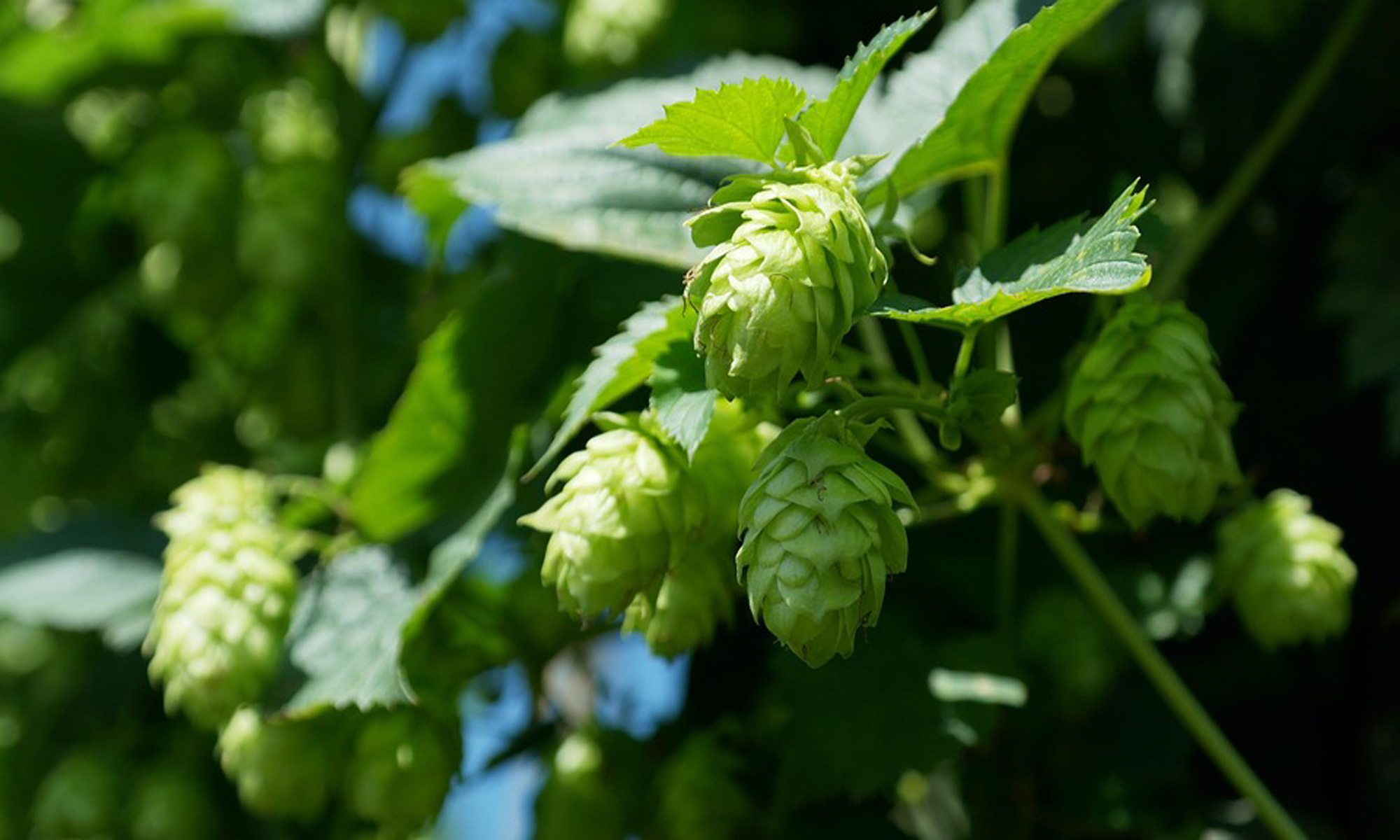
How much hops should you add?  That’s really subjective.  Know that if it’s a smaller beer you can’t really add a ton or it’s going to get out of balance.  We’ll get into that in our next part to the series though.


hops


For Extract Brewers

A really easy way to make a session brew is to just half the recipe.  So if you have a 6% beer recipe, half it all the way across and now you have a 3%.  Everything should stay in balance.  The other way is buy the 5 gallon recipe and then just make 10 gallons.  It’s as bit tricky doing it that way because normally you are doing partial boils.  If you don’t pour correctly you might end up with inconstant beers.


Some beers work better for this than others.  IPA’s work well for session IPA’s, same thing with wheats, pales, browns, and porters.


Next in the series we are going to talk about how to develop a recipe for a session and finally start throwing out some session beer recipes to try before it gets to hot outside.


Jays Brewing Logo


Previous Post

Next Post 


Related Post

All-Grain Series

How To Design Your Own Recipe Series


Cherry Mead – 1 Gallon Recipe

When it starts to get warmer outside, it means one thing for wine makers – it’s easier to get good fruit.  Cherry mead is a refreshing mead that is a light red color, and has a slight fruity flavor.  I’m pretty sure that you won’t find this mead at a wine store so it’s an opportunity to try to make one.  This is the recipe I use for my cherry meads.   It’s simple, refreshing, and a favorite among my friends.


SANYO DIGITAL CAMERA


Yield: 1 Gallon

Ingredients

3 lbs clover honey

1 lb dark cherries, halved

1 teaspoon acid blend

1 teaspoon pectic enzyme

1 package champagne yeast

1 teaspoon yeast nutrient


Instructions

  • Boil honey in large pot (1 part honey 2 parts water)
  • Put cherries in a 2 gallon plastic container
  • Pour the honey mixture over the fruit and let it cool
  • Add acid blend, pectic enzyme and enough water to make 1 gallon
  • Stir
  • Add yeast nutrient and yeast to mixture
  • Let it ferment for 1 week
  • Rack into 1 gallon fermenter
  • Let it sit for 3 months
  • Rack again
  • Let it sit for about 6 months
  • Bottle and let it age for 6 months

Jays Brewing Logo


Tip For Moving Your Carboy

Moving carboys around can be a stressful event.  You’ve worked so hard just to get the beer to this point and if something happens, the beer will be potentially ruined.  There is much debate on the internet on which is better, glass or plastic.   There are benefits to both for those that are on the fence, and we do have a post about the differences between the two. It doesn’t matter what type of carboy that you have though, it can be a pain just to move them.


Glass carboy’s are heavy to say at the least.  And when you add wort or wine to them, well it just got heavier.  I’ve heard of horror stories and personally had my own horror stories with glass carboys.  With the plastic carboy’s you still have the same problem with moving them.  While they do not break if you drop them, you can’t pick them up by the neck or it sucks in the water from the air lock.  That means moving plastic carboys turns into a juggling act that usually ends with some awkward hand positioning.


However, there is a universal method for moving carboy’s and I’ve been using this method for a while.  The answer is in two words, “Milk Crates”.   Genius right?  I can’t take credit for the idea, it was a friend that I saw doing it and thought it was brilliant.


milk crate


Milk crates cost $18 bucks for a set of three – the solution is a cheap one.  The way that you end up using the milk crate is, you set your glass or plastic carboy in the milk crate before you fill it up with beer or wine.  When you have to move it, you don’t have to worry about dropping it or about setting it down and breaking it because you use the handles of the milk crate.  It’s so easy I’m sure you’re wondering why you haven’t thought of this before.

Either way it’s a nice trick to use when ever you have to move your carboys around that will save you from a sliced up hand or spilled beer and wine on the ground.  Hope it helps!


Related Post

Glass Carboy Vs. Plastic Carboy

Maple Syrup Pale Ale

How To Make Yeast Starter

Canning Your Wort


Jays Brewing Logo

Session Beers – Step 1 – Profile Of Small Beer…

The world of beer is vast.  So many different styles, so many different approaches.  When it comes to beers, this is my forte – session beers.  With the change in seasons among us, we are going to do a series on session beers because soon enough it will be perfect weather for drinking them.  But before we start hacking away at this genre of beers there a few things that you should know.


Take Notes
TIME TO LEARN ABOUT BEER!


Commonly small beers and session beers are thrown around interchangeably.   So this is where the beer nerd talk comes out and I’m going to break down exactly what this style is.


small beers
A style you can drink a few of…


A session beer really is any beer that does not go higher than 5% ABV.  Since that beer style become so vast, I like to make it a bit more niche, my personal opinion is the beer should be 4.7% ABV or lower.  The idea is simple, you can drink quite a few and still walk a straight line.   The beer will normally have a clean finish and a good balance of hops and malt.  Thanks to beers such as Michelob Ultra Light some might refer to these beers as, “Chick beers”, hopefully you perception will change.


“It Only Has 15 Calories”


Seems simple enough right?  The truth is, it’s not.  What’s really hard about smaller beers is that everything you add has a major impact.  I know that people could argue that goes the same for all beers, but in my opinion that is not the exactly the case.  If you are doing a big Imperial Stout lets say, specialty grains that you add can hide.  Sometimes, bigger beers are safe because they can be forgiving with time.   If you are doing a session lager, any mistake that you have is going to be obvious because there isn’t a big, “backbone” of flavor to begin with.


So when do you drink session beers?  Well I like them year round, but I really think that their time to shine is in the late spring, summer and early fall.  When you are outside, it’s hot out and want to drink a flavorful beer that won’t get you drunk right away, here you go.


After mowing the lawn, these are perfect


So this series is going to go into a few different things that you should keep in mind when making session beers, how to do recipe development for session beers and also a handful of recipes that are amazing session beers.    I hope that at the end of it if you don’t already, you gain an appreciation for the small guy and if you do love the smaller beers, you gain a few pointers.  With that said, I’m very excited about this series.


summertime


Cheers,


Next Post

Related Post

All-Grain Brewing Series

How To Design A Recipe Series

Plastic Carboy vs Glass Carboy

Trick To Get Stopper Out Of Carboy


Jays Brewing Logo


Back Of The Envelope Beer Math

When you are coming up with a recipe on the spot, sometimes it’s best to know a few different formulas to build/check a recipe.  I use a few different back of the envelope beer formulas when I’m doing any type of recipe development.  These are a few that I use:


Calculating FG and Volume

OG x Initial Boil Volume = Total Gravity Points

Total Gravity Points/ Final Boil Volume = FG


boiling water


Calculating The Evaporation Rate

(starting volume – ending volume)/boil length = evaporation rate


hops


Estimating Hop IBU

IBU = weight of hops in ounces x alpha acid % x utilization % volume of final batch in gallons x 1.34*

*constant to convert measurement into US standards


1 oz. of Northern Brewer (10% alpha acid) boiled for 60 minutes in a full-wort boil of moderate gravity wort for a five-gallon batch.

IBU = 1 x 10 x 30 / 5 x 1.34 = 44.77

Let’s say you are using last year’s recipe but the alpha acid of your hops has changed to 8% alpha acid. You will need to solve for the weight of hops with the new alpha acid percent. Rearrange the formula so that…

weight of hops in ounces =

IBUs desired x volume of final batch in gallons x 1.34* / alpha acid percent x utilization percent

*constant to convert measurement into US standards

oz. hops = 44.77 x 5 x 1.34 / 8 x 30 = 1.25 oz. hops


AAU Calculation

These are helpful for getting the same hops every time.


beer


Calculating ABV

(OG-FG) x 131


These are really good for approximations.  If you want the exacts then I would use different brewing software for that.   Personally I like the back of the envelope math.  I use it for most of my recipes that I do.  I didn’t really start using beer programs before writing this blog up.  Either way, I hope these prove some use to you in the future when you are in a pinch and need some beer math to aid out.   Let me know if you have any formulas that you use.


Related Post

How To Make Starters

Maple Syrup Pale Ale Recipe

Summer Ale


Jays Brewing Logo

Belgium Wit Hybrid Beer Recipe

If you want to do a different style beer, something a bit unusual – this may be the beer you want to try out.  This is a pretty cool beer.  It’s a Belgium Wit beer … kinda.

Since sugar is added to it, the beer will have a bit higher ABV without adding too much (as in no additional) malt flavor.  It’s a nice little twist to a Wit style beer.  If you were going to send this beer into a competition of any sort, it wouldn’t fit the BCJP style but regardless, a good tasting beer never the less.   If you are going all-grain make sure that you keep to the ratio of wheat to pils.


oranges


Ingredients

6.5 lbs Wheat DME

8 oz light candi sugar

1 oz German Hallertau hops (60 minutes)

1 tsp Orange Peel (10 minutes)

1/2 tsp Coriander (10 minutes)


WLP 400 or WLP 500

For Dry Yeast WB – 06 or T-58


Specifications

OG: 1.050

FG: 1.010

IBU: 10.5

SRM:4

ABV: 5.2%


Directions

  • Take 2.5 gallons of water and all the malt extract, candi sugar, and add hallertau hops
  • Bring to boil
  • Boil for 50 minutes
  • Add Orange peel and oriander
  • Boil for 10 minutes
  • End boil
  • Cool down, put in fermenter, pitch yeast after filling to 5 gallons
  • Ferment for about 7-14 days
  • Bottle with corn sugar (.75 cup) drink after 2-3 weeks in bottle.


Jays Brewing Logo

8 Solutions For Lack Of Fermentation

So you made your beer, pitched your yeast and there is one problem – it’s not working. As of late, there has been quite a few people saying that there fermentation isn’t working and there are no signs of fermentation to be seen.  No reason to worry this can be easily fixed.  There could be a couple things that have gone wrong and that’s why you are seeing any fermentation.  So I have created a quick checklist on what to do if you see that your fermentation is stuck or did not start.


Check List

1) Wait 72 hours before freaking out…

A lot of people think that within just a few hours yeast should start percolating and that the air lock will be going nuts. That’s really not the case.  Depending on the OG of the beer, what type of yeast your pitched and the temperature of fermentation you’ll get different results.  I would wait up to 72 hours before making the assumption that something is wrong.  After 72 hours of nothingness, then it’s time to start trouble shooting.


72 hours


2) Is the lid down all the way?

If you are using a carboy it’s pretty easy to see if the bung is in all the way.  If you are using a plastic bucket with a lid, sometimes the lid isn’t closed all the way.  If it’s not, CO2 could be escaping from the crack in the lid making it look like no fermentation is taking place.  So press down around the lid to make sure you have an air tight fit.


Gas Might Be Escaping


3) Did you cool down the wort before you pitched the yeast?

Sometimes you can be in hurry and you didn’t pitch the yeast when the wort was cool enough.  This can kill the yeast.  If you pitched your yeast above 80 degrees there is a good chance that the yeast is dead.  It happens, a mistake that won’t be repeated I’m sure.  The fix is that you need to pitch more yeast at room temperature.


check the temp


4) How cold are you fermenting at?

Ales like it at room temperature.  Room temperature is anything from 65-75.  I would shoot for the middle of the road though, 70 degrees.  If you are lower than that, you can expect that the results might take a bit longer.  Also the start-up for fermentation will be slower and not aggressive.  So if you are in the low 60’s (64-60) just know it’s not going to take off like a freight train.  If you are fermenting a bit too cold, move it to a warmer part of the house, or put a heater next to it.  If you don’t have a heater, just wrap a blanket around it.


Cold As Ice


5) Check air lock water…

Sometimes with the 3 piece air locks, water can actually hold down the center part of it.  I would take off the air lock and then refill it and put it back on.  Maybe you’ll see the middle part rise up.

6) Was it working ever and what was the OG?

Sometimes yeast will start to work and then just stops.  This can be caused by yeast just falling out.  Take the fermenter and rock it back and forth.  If the yeast fell out, this will know the yeast back up and start fermenting again.  Quick and easy fix.  If you do that and nothing happens, it’s time to repitch yeast.  If you had a beer with an original gravity of 1.080 or higher and you didn’t make a starter, you might have to repitch yeast to get a good fermentation.


sugar


7) Is it your first lager?

Lagers don’t act like ales, you can’t judge progress by the air lock.   Lagers really are their own animal.  We have a guide on how to make them and what to expect.  If the answer to this question is, “Yes”, then it’s best to take a look at what to expect.

8) Check the gravity…

If the fermentation was going and then it stopped, this is an obvious one – check the gravity.  There is a chance that the beer is just done fermenting.  If you are fermenting a small beer with an OG of 1.035, don’t expect it to go on for weeks at a time. It’s going to boom and then bust because there just isn’t that much fermentation fuel to begin with.


Conclusion

Troubled fermentation can be frustrating.  I would go down the check list next time you have fermentation troubles and see if this solves it.   In the past we had a post about an emergency kit to have. One of the extra things that most homebrewers should always have on stock is just a few extra packets of generic dry yeast.  This solves most problems.


Let me know if you have any quick solutions for stuck fermentation. Cheers!


Related Post

Emergency Kit For Homebrewers

Guide On Lagers

Off Flavors And The Fixes

Yeast Profiles


Jays Brewing Logo


Moose Drool Beer Recipe Clone

Brown ales are really good beers to drink year round, they are some of my favorites.  This recipe got pretty big because of home brew shops using this recipe for beginners.  It’s a solid brown ale.  The thing that is so great about browns ales as I’ve said many times before is, that most people like them.  They are not too dark, not too light.  In general most people have tasted them as well, so they can compare it to something.  It’s a  middle of the road beer.  Generally you won’t find too many home brewers saying that there favorite beer is a brown ale, but at the same token you won’t find to many home brewers saying that they hate them either.  It’s kinda like a wallflower beer, most people forget that you can even make them.

Brown ale’s are pretty forgivable, meaning they can hide mistakes. So if you are giving a go at all-grain brewing – this style of beer is really good to start with.   This particular brown has a strong malt flavor with a nice hop balance.  Since there are quite a few hop additions to the beer, it has a full hop profile.  From the time that you lift the glass to your nose to the last drop that rolls off your tongue you will have a bit of hoppyness.  Keep in mind these are low alpha acid hops so it’s not going to be anything like an IPA sitting at only 21 IBU’s.  Also with the Malto Dextrin added to the recipe it really gives a bit more mouth-feel.  If you wanted to do this one all-grain you could use 2-row Brewers malt and it would taste just fine.  Conversion Chart.


moose


Ingredients

1 lb 60L Crystal Malt

4 oz Chocolate Malt

1.5 oz Black Malt

7 lbs Golden Light LME

4 oz Malto Dextrin

1 oz East Kent Goldings (60 minutes)

1/4 oz Liberty Hops (15 minutes)

1/4 oz Willamette (5 minutes)

1/4 oz Liberty (1 minute)

WLP 005 or Saf – 04


Spec

OG: 1.056

FG: 1.014

IBU: 21

SRM: 48

ABV: 5.3%


Instructions

  • Heat 2.5 gallons of water to 150
  • Steep grains for 30 minutes
  • Take grains out
  • Add malt extract and malto dextrin
  • Bring to boil
  • Add 1 oz EKG hops
  • Boil for 45 minutes
  • Add 1/4 oz Liberty
  • boil for 10 minutes
  • Add 1/4 oz Willamette
  • Boil for 4 minutes
  • Add 1/4 oz Liberty hops
  • Boil for 1 minute
  • End boil
  • Cool down, put in fermenter, fill up 5 gallons pitch yeast
  • Ferment for 2 weeks
  • Bottle with 3.4 cup of corn sugar
  • Let it sit in bottles for 3 weeks


 Related Post

All-Grain Series

Smash Brewing

3 Levels Of Clean

Answer Guide To Base Malts


Jays Brewing Logo


Mississippi Is Close To Legalizing Homebrew

Not all the states in the US can brew there own beer.  One more state is about to start brewing there own though, Mississippi!  It’s getting close now for Mississippi.

It still seems odd that you can’t brew your own in all the states.  Hopefully once it becomes legal down there, people catch on with the hobby.  I really shouldn’t be too surprised that homebrewing is illegal in some states still, there are laws for buying raw milk that are just as harsh as if we did a drug deal on the corner of a street -so I guess I need to get over that one…  Cheer them on though!

Click Here To Read Article


Jays Brewing Logo